









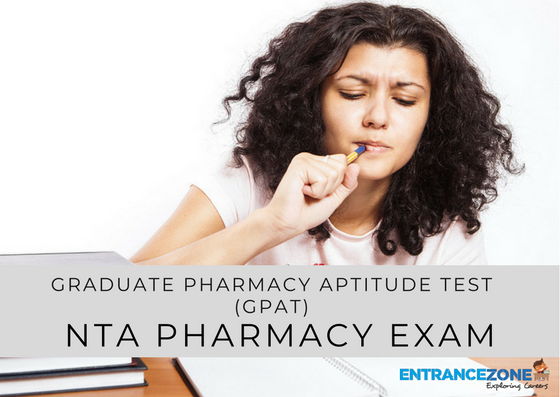
NTA Pharmacy Exam: GRADUATE PHARMACY APTITUDE TEST (GPAT) is a national level entrance examination for entry into M.Pharm programmes. This exam is held once a year. The GPAT is a computer-based online test that is conducted in a single session for three hours. Its score is accepted by all AICTE-Approved Institutions/University Departments/Constituent Colleges/Affiliated Colleges. A few scholarships and other financial assistance in the field of Pharmacy are also given on the basis of the GPAT score. Those who are seeking to apply must read the whole article to know the GPAT 2027 schedule, when announced.
Still confused about what to do after Class 12?
- Let AI analyse your interests, strengths and goals. Take the Free Career Assessment
GPAT 2027 Latest Update as on 28 Sep 2026
Contains
Checked on 28 Sep 2026
As of 28 Sep 2026, NTA has not released an official GPAT 2027 notification; registration is tentatively expected to open around November 2026, based on the previous year's cycle pattern.
As of 28 Sep 2026, the National Testing Agency (NTA) has not yet released the official GPAT 2027 notification, exam dates, or registration schedule. The only confirmed official activity detected today relates to NTA's release of admit cards for a Stage 2 examination of the National Institute (NI) — which is unrelated to GPAT 2027. The GPAT 2027 cycle is therefore still in its pre-notification phase. Based on the previous year's pattern, the official notification for GPAT 2027 is expected in October–November 2026, with registrations opening around the same time and the exam tentatively scheduled for February 2027. Students preparing for GPAT 2027 should bookmark gpat.nta.nic.in for official updates, ensure their pharmacy degree eligibility is in order, and begin reviewing the NTA-prescribed syllabus covering pharmaceutics, pharmacology, and pharmaceutical chemistry. No confirmed dates should be assumed until NTA publishes the official information bulletin.
- Official notification expected: October–November 2026 (GPAT 2026 notification released in November 2025)
- Registration expected to open: November 2026 (last year: ~1 Nov 2025)
- Application correction window expected: December 2026 (based on prior-year pattern)
- Admit card release expected: January 2027 (last year: mid-January 2026)
- GPAT 2027 exam expected: February 2027 (last year: 15 Feb 2026)
- Result declaration expected: March 2027 (last year: ~March 2026)
Sources: NTA Official Website · GPAT NTA Official Portal
NTA Pharmacy Exam GPAT 2027 Important Dates
From now onwards, the National Testing Agency is being conducted Authority for Conducting the GPAT as declared by MHRD. Candidates can check the Important Dates below.
| Events | Dates |
|---|---|
| GPAT application form 2027 release date | Expected to be announced by NTA |
| Last date to submit the form | Expected to be announced by NTA |
| Last date to pay the application fee | Expected to be announced by NTA |
| Correction Window | Expected to be announced by NTA |
| Availability of admit card | Expected to be announced by NTA |
| GPAT 2027 exam date | Expected to be announced by NTA |
| Display of recorded responses and answer key | Expected to be announced by NTA |
| Display of Final answer key | Expected to be announced by NTA |
| Declaration of result | Expected to be announced by NTA |
NTA Pharmacy Exam GPAT 2027 Registration
Important instructions for applying NTA Pharmacy Exam GPAT 2027 will be updated once the application process opens:
- Candidate must apply in online mode only at the official website gpat.nta.nic.in.
- Alos, more then 0ne form will lead to the cancellation of candidature.
Things to keep ready before filling the form:
- A computer with an internet connection
- Qualification details
- Scanned copy of passport size photograph
- Scanned copy of the signature
- Valid email id
- Valid mobile number
- Credit/debit card, or net banking details to pay fee
- Printer
How to apply for GPAT 2027? – Following are the steps to be followed to fill the form:
- Step 1- Go to gpat.nta.nic.in and register by filling up the details asked in the registration form. Note down the application number.
- Ste 2 – Then login with application number and password and upload documents – photo, signature.
- Step 3 – After that pay fee.
- Step 4 – Then print the confirmation page and take multiple copies of it.
- Step 5 – Finally, choose the exam city.
NTA Pharmacy Exam GPAT 2027 Application Fee
Major Changes This Year
No official change to GPAT 2027 exam pattern, syllabus, or eligibility has been announced yet; all details are expected to mirror the 2026 cycle until NTA confirms otherwise.
No major change has been officially announced yet for GPAT 2027. NTA has not issued any notification regarding alterations to the exam pattern, syllabus, eligibility criteria, marking scheme, or mode of examination. Based on prior years, GPAT is expected to remain a computer-based test (CBT) of 3 hours, comprising 125 multiple-choice questions carrying 4 marks each, with a negative marking of 1 mark per wrong answer. Eligibility is tentatively expected to remain a B.Pharm degree or equivalent. Students should treat all such details as tentative until the official information bulletin is published on gpat.nta.nic.in.
The candidates can pay the application fee using debit card/credit card / net banking / UPI services / Paytm. The fee is as follows
| Categories | Amount |
| GEN (UR) | Boys – Rs 2000 Girls – Rs 1000 |
| Gen-EWS/ SC/ST/PwD /OBC-(NCL) | Boys – Rs 1000 Girls – Rs 1000 |
NTA Pharmacy Exam GPAT 2027 Eligibility Criteria
The candidate can go through the eligibility criteria before appearing in the test.
- The foremost criteria are that the aspirant must be a citizen of India.
- Bachelor’s degree holders in Pharmacy are must (4 years after 10+2, including lateral entry candidates).
- B. Pharmacy course is also eligible for appearing in GPAT exam those who are in the final year.
- B. Tech (Pharmaceutical and fine chemical technology) / Equivalent Students are not eligible to appear for GPAT examination.
NTA Pharmacy Exam GPAT 2027 Question Pattern
Candidates can check below NTA Pharmacy Exam GPAT 2027 Question Pattern:
- Medium of question paper: English medium
- Type of questions: There are multiple-choice questions in the test
- Duration: The candidates are given a 03 hours duration(180 minutes)
- No. of questions: There are 125 MCQs in the test
- Each question is of 04 marks.
- For each incorrect answers, 01 marks shall be deducted
- Unanswered question will lead to 0 marks
Examination Scheme
| TOPIC | No. of Qs | Max Marks |
| Pharmaceutical Chemistry | 38 | 152 |
| Pharmaceutics | 38 | 152 |
| Pharmacognosy | 10 | 40 |
| Pharmacology | 28 | 112 |
| Other Subjects | 11 | 44 |
| Total | 125 | 500 |
NTA Pharmacy Exam GPAT 2027 Syllabus
| PHYSICAL CHEMISTRY | Composition & physical states of matter, Colligative Properties, Thermodynamics, Refractive index, Solutions, Electrochemistry, Ionic equilibrium, Kinetics |
| PHYSICAL PHARMACY | Matter properties of matter, Micromeritics and powder rheology, Surface and interfacial phenomenon, Viscosity and rheology, Dispersion systems, Complexation, Buffer, Solubility |
| PHARMACEUTICS | Pharmacy Profession & Introduction to Pharmaceuticals, Introduction to dosage form, Sources of drug information, Allopathic dosage form, Crude extract, Allergenic extract, Biological products, Pharmaceutical Plant location layout, Dosage Form Necessities and Additives, Powders, Capsules, Tablets, Parenterals – product requiring sterile packaging, Suspensions, Emulsions, Suppositories, Semisolids, Liquids(solutions, syrups, elixirs, spirits, aromatic water, liquid for external uses), Pharmaceutical Aerosols, Ophthalmic preparations, Preformulations, Stability of formulated products, Prolonged Action Pharmaceuticals, Novel Drug delivery system, GMP and Validation, Packaging Materials, Cosmetics, Pilot plant scale-up techniques |
| PHARMACOLOGY | General Pharmacology, Neurohumoral transmission in the autonomic and central nervous system, Pharmacology of peripheral nervous system, Pharmacology of central nervous System, Pharmacology of cardiovascular system, Drugs acting on the urinary system, Drugs acting on Respiratory system, Pharmacology of Endocrine system, Chemotherapy, Autacoids and their Antagonists, Pharmacology of drug acting on the gastrointestinal tract, Chronopharmacology, Immunopharmacology, Vitamins & Minerals, Principles of toxicology |
| PHARMACOGNOSY | Introductory Pharmacognosy, Classification of crude drugs, Factors influencing the quality of crude drugs, Techniques in microscopy, Introduction to phytoconstituents, Principles of plant classification, Pharmaceutical aids, Animal products, Plant products, Toxic drugs, Enzymes, Natural pesticides and insecticides, Adulteration and evaluation of crude drug, Quantitative microscopy, Biogenetic pathways, Carbohydrates & lipids, Tannins, Volatile oils, Resinous drugs, Glycosides, Alkaloids, Extraction and Isolation Techniques, Phytopharmaceuticals, Quality control and standardization of herbal drugs, Herbal formulations, Worldwide trade of crude drugs and volatile oils, Herbal cosmetics, Traditional herbal drugs, Plants based industries and research institutes in India, Patents, Ayurvedic system of medicine, Homeopathic system of medicine. |
| PHARMACEUTICAL ANALYSIS | Importance of quality control in pharmacy, Acid-base titrations, Non-aqueous titrations, Oxidation-reduction titrations, Precipitation titrations, Complexometric titrations, Gravimetry, Extraction techniques, Potentiometry, Miscellaneous methods of analysis, Calibration, General principles of spectroscopy, Ultraviolet-visible Spectrometry, Spectrofluorimetry, Flame photometry & atomic absorption spectrometry, Infrared spectrometry, Proton nuclear magnetic resonance spectrometry, Mass spectrometry, Polarography, Nephelometry & Turbidimetry, Chromatography, Miscellaneous. |
| BIOCHEMISTRY | Cell, Carbohydrates, Lipids, Vitamins, Biological oxidations & reductions, Enzymes, Nucleic acids, Hereditary diseases. |
| BIOTECHNOLOGY | Plant Cell and Tissue Culture, Animal Cell Culture, Fermentation Technology and Industrial Microbiology, Recombinant DNA Technology, Process and Applications, Biotechnology-Derived Products. |
| MICROBIOLOGY | Introduction to Microbiology, Microscopy and staining technique, Biology of Microorganisms, Fungi and Viruses, Aseptic Technique, Sterilization & Disinfection, Microbial spoilage, Vaccines & Sera, Microbial Assay. |
| PATHOPHYSIOLOGY | Basic principles of cell injury and adaptation, Basic mechanisms of inflammation and repair, Disorders of fluid electrolyte and acid-base balance, Disorders of homeostasis: white blood cells, lymphoid tissues, and red blood cells related diseases, etc. |
| BIOPHARMACEUTICS AND PHARMACOKINETICS | Bio-pharmaceutics, Bio-availability & Bio-equivalence, Bio- pharmaceutical statistics. |
| CLINICAL PHARMACY AND THERAPEUTICS | CLINICAL PHARMACY AND THERAPEUTICS |
| HUMAN ANATOMY & PHYSIOLOGY | Cell physiology, The Blood, Gastrointestinal tract, Respiratory System, Autonomic nervous system, Sense organs, Skeletal System, Central Nervous system, Urinary System, Endocrine Glands, Reproductive System, Cardiovascular system, Lymphatic system. |
| PHARMACEUTICAL ENGINEERING | Fluid flow, Heat transfer, Evaporation, Distillation, Drying, Size reduction and size separation, Extraction, Mixing, Crystallization, Filtration and Centrifugation, Dehumidification and humidity control, Refrigeration and air conditioning, Material of constructions, Automated process control systems, Industrial hazards & safety precautions. |
| PHARMACEUTICAL MANAGEMENT | Introduction to management, Planning and Forecasting, Organization, Research Management, Inventory Management, Communication, Marketing Research, Leadership and motivation, Human resource and development (HRD), GATT, World trade organization (WTO) and trade-related intellectual property rights (TRIPS), Standard institutions and regulatory authorities. |
| PHARMACEUTICAL JURISPRUDENCE | PHARMACEUTICAL JURISPRUDENCE |
| DISPENSING & HOSPITAL PHARMACY | DISPENSING & HOSPITAL PHARMACY |
| ORGANIC CHEMISTRY | General principles, Different classes of compounds, Protection & deprotection of groups, Aromaticity & chemistry of aromatic compounds, Different aromatic classes of compounds, Polycyclic aromatic hydrocarbons, Carbonyl Chemistry, Heterocyclic Chemistry, Bridged rings, Kinetic & thermodynamic control, Stereochemistry, Carbohydrates, Amino acids & proteins, Pericyclic reactions |
| PHARMACEUTICAL CHEMISTRY | I. Pharmaceutical Inorganic Chemistry – Pharmaceutical Impurities, Monographs, Isotopes, Dentifrices desensitizing agents & anticaries agents. II. Medicinal Chemistry – Therapeutic classes of drugs, Various classes of therapeutic agents, Different classes of therapeutic drugs, Different classes of therapeutic drugs |
Important Links
Click Here to Download GPAT 2021 Information Brochure
NTA Pharmacy Exam GPAT 2027 Highlights
Candidates can check below in the table short details about NTA Pharmacy Exam 2027:
| Exam Name | GPAT (Graduate Pharmacy Aptitude Test) 2027 |
|---|---|
| Conducting Body | NTA (National Testing Agency) |
| Level of exam | National Level |
| Frequency | Once a Years |
| Official website | gpat.nta.nic.in |
FAQ (Frequently Asked Questions)
Question 1. What is the mode of Examination?
Answer 1. The examination was conducted in online mode as a computer-based test (CBT).
Question 2. How many times GPAT 2022 is conducted in a year?
Answer 2. It is conducted once a year.
Question 3. Will I receive my scorecard through Post?
Answer 3. No, you have to download it from the official website of GPAT.
For more details visit the NTA GPAT official website: http://nta.ac.in/Pharmacyexam
Stay tuned with Entrancezone.com for more updates on NTA Pharmacy Exam 2027.
GPAT 2027 is conducted by the National Testing Agency (NTA), the statutory body responsible for administering national-level entrance examinations. The official schedule, registration details, and syllabus for GPAT 2027 are expected to be announced by NTA on its official website.
Frequently Asked Questions
When will GPAT 2027 registration start?
NTA has not confirmed GPAT 2027 registration dates yet. Based on last year's pattern, registration is tentatively expected to open in November 2026. Check gpat.nta.nic.in for official announcements.
What is the expected exam date for GPAT 2027?
No official exam date has been announced. Based on previous years, GPAT 2027 is tentatively expected in February 2027. This is an estimate — do not treat it as confirmed.
Who conducts GPAT 2027?
GPAT (Graduate Pharmacy Aptitude Test) is conducted by the National Testing Agency (NTA) on behalf of the Ministry of Education, Government of India.
What is the eligibility criteria for GPAT 2027?
No official change has been announced. Tentatively, candidates must hold a B.Pharm degree or be in the final year of B.Pharm, consistent with previous years. Confirm once the official notification is released.
Has the GPAT 2027 syllabus changed?
NTA has not announced any syllabus change for GPAT 2027. The syllabus is expected to remain the same as 2026, covering pharmaceutics, pharmaceutical chemistry, pharmacology, and pharmacognosy.
What is the exam pattern for GPAT 2027?
No official pattern change has been confirmed. Based on prior years, GPAT is tentatively expected to be a 3-hour CBT with 125 MCQs, 4 marks for correct answers, and –1 for incorrect answers.
Where can I find the official GPAT 2027 notification?
The official GPAT 2027 notification, when released, will be available on gpat.nta.nic.in. As of 28 Sep 2026, no notification has been published yet.
Is GPAT 2027 required for M.Pharm admissions?
Yes, a valid GPAT score is typically required for admission to M.Pharm programs at AICTE-approved institutions and for AICTE scholarships/fellowships, consistent with previous years.


