









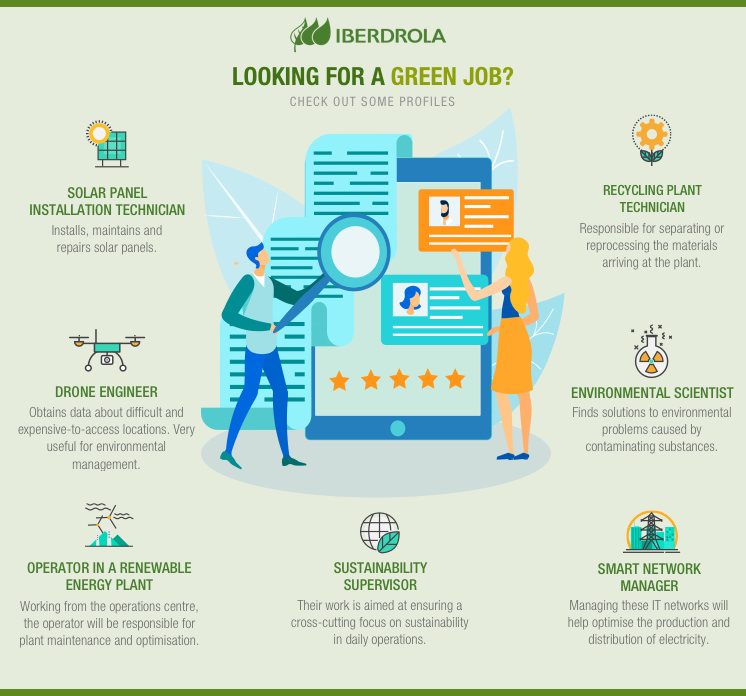
Careers to Save the Environment: Earth has fallen into a state of deterioration and its high time to do something about it. If you are serious about undertaking change and want to protect the environment the start thinking about making a career in the field of environment. Sectors like energy and environmental science are growing rapidly, creating greater demand for workers with backgrounds in science. There are many options that candidates can opt for. Some of the popular careers to save the environment are given below, Jump to download the infographic.
Still confused about what to do after Class 12?
- Let AI analyse your interests, strengths and goals. Take the Free Career Assessment
Latest Update as on 03 Sep 2026
Contains
Checked on 03 Sep 2026
As of 03 Sep 2026, no official exam notification is directly linked to this article, which is a career-overview piece covering environment and planet-saving professions in India — not tied to a single specific examination.
As of 03 Sep 2026, no official exam notification is directly linked to this article, which is a career-overview piece covering environment and planet-saving professions in India — not tied to a single specific examination. No official source material could be fetched to confirm any update. However, students aspiring to environment-related careers in India should note that the UPSC Civil Services Exam (CSE) notification for 2027 is tentatively expected around September–October 2026, based on previous-year patterns. Similarly, UPSC's Indian Forest Service (IFoS) and state-level PSC exams follow annual cycles. Aspirants can track opportunities through moef.gov.in, the official portal of the Ministry of Environment, Forest and Climate Change. Students are advised to identify their preferred career stream — ecology, policy, law, renewable energy, or conservation — and align their preparation with the relevant entrance exam calendar for the 2026–27 cycle.
- No specific exam is linked to this career-overview article; it covers environmental and planet-saving careers broadly (not tied to a single exam cycle)
- Candidates interested in environment-related careers should monitor UPSC CSE 2027 notification, expected around Sep–Oct 2026 based on previous-year patterns
- State PSC and forest service exam notifications for 2026–27 cycles are expected to be released between Oct–Dec 2026 (tentative, based on past patterns)
- Entrance exams for environmental science courses (e.g., JNU EE, IISER Aptitude Test) are typically held between Feb–May; 2027 cycle announcements expected by Nov–Dec 2026
- Green-sector job notifications (MoEFCC, CPCB, Wildlife Institute of India) are posted on official portals on a rolling basis; students should check regularly throughout 2026–27
- NGO and international organisation (UNDP, WWF India) hiring rounds for entry-level environmental roles are typically announced Nov 2026–Feb 2027 for the next academic year intake
Sources: Ministry of Environment, Forest and Climate Change — Official Portal
Wildlife Conservation and Indian Forest Service(IFS)
As more and more species becoming endangered, it is important to ensure the variety and variability of life on earth. Wildlife Conservationists work to preserve ecosystems, implementing biodiversity programs across wildlife habitats like oceans, rain forests and grasslands. Commonly employed by local, state and national governments, wildlife conservationists help to preserve the habitats of animals and plants. The job of a Wildlife Conservationist is related to that of an IFS officer. An Indian Forest Service officer implements the National Forest Policy to ensure environmental maintenance and stability of ecological balance.
How to become a Wildlife Conservationist and IFS Officer?
To become a wildlife conservationist candidate must have a Bachelor’s degree in a subject related to Wildlife Biology along with a Master’s degree in Wildlife Biology and Conservation and get certified as a Wildlife Biologist.
- To become an IFS officer, the candidate must have a Bachelor’s degree with at least one of the subjects namely, Chemistry, Geology, Mathematics, Physics, Animal Husbandry & Veterinary Science, Botany, Statistics and Zoology, Agriculture, Forestry or Engineering from any recognized university along with the IFS examination conducted by UPSC annually.
Environmental Engineer
Major Changes This Year
No major change has been officially announced yet for any specific exam tied to this article. As a career-overview piece, it does not map to a single conducting body or exam. Tentatively, aspirants should watch for any revised eligibility criteria or new green-sector job schemes announced by MoEFCC or UPSC for the 2026–27 cycle. India's expanding renewable energy and climate policy sectors may generate new recruitment categories, but no official notification confirming such changes has been fetched or verified as of 03 Sep 2026.
To protect the environment from current damage and preventing future deterioration, we also require the infrastructure and devices to do it. Environmental Engineers make this possible by utilizing scientific and engineering principles to create programs, products and machines that won’t be detrimental to the environment and will help solve all the environmental problems.
How to become an Environmental Engineer?
Candidate must have a bachelor’s degree in Environmental Engineering Or candidate can pursue Civil Engineering, Agricultural Engineering, Chemical Engineering or any other related field, along with a Master’s degree in Environmental Engineering.
Landscape Architect and Urban Planner
Landscape Architects design and plan the outdoor areas in such a way that they are compatible with the natural environment like residences, school campuses, parks, shopping centres, golf courses, and parkways etc. These are designed in a way to let the environment breathe, ensuring enough space for water to seep into the ground, ensuring that their design won’t cause any water logging. They basically help to create beautiful, functional, and environment-friendly cities/states.
Urban or Regional Planners helps local governments to decide how to best use their resources and land to prevent congestion and create aesthetically-pleasing public spaces. They plans and develop programs along with government officials/developers.
How to Become a Landscape Architect/Urban Planner?
Candidate must have a bachelor’s and master’s degree in Landscape Design or they can have a bachelor’s degree in architecture along with a master’s in Landscape Architecture.
To become an Urban Planner candidate must have a bachelor’s in Urban Planning along with a Master’s in Urban Planning.
Environmental Pollution Manager
Pollution is choking the people of India to an extent that it has already become a host of health problems that can be toxic for human beings as well as for animals. To prevent such devastating effects of pollution Pollution Managers are required. They basically develop pollution control, pollution prevention, and recycling programs. They coordinate with all aspects of pollution prevention, risk assessment, resource use, waste management, environmental health and employee involvement to carve a better and pollution-free future.
How to become an Environmental Pollution Manager?
To become an environmental Pollution Manager candidate must have done MBA in Pollution Control Management or M.Sc. in Pollution and Environmental Control.
Environmental Lawyer
Any legal issues related to the environment are dealt with an Environmental Lawyers. Such lawyers aid companies, individuals, organisations and the government to resolve environmental issues. They deal with revolving issues around water and air quality, agriculture, wetlands, biodiversity, waste management, green initiatives, hazardous waste, species protection, sustainability strategies and alternative energy sources.
They also work with the National Green Tribunal (a government body) dealing with cases related to conservation of forests, environmental protection other natural resources.
How to become an Environmental Lawyer?
Candidate has to clear CLAT (Common Law Admission Test) to be eligible for a Bachelor of Law (LLB) and after LLB, pursuing a Master’s of Environmental Law will help a candidate to become an Environmental Lawyer.
Environmental Scientist
Environmental Scientists can lace their knowledge of Physics, Chemistry and Biology to work towards environmental problems. They work in the laboratory and the field to study the degradation of the environment caused by the activities of humans and develop measures to build a sustainable environment. They also find the causes of environmental degradation and then come up with corrective measures and create conservation programmes. An Environmental Scientist may be employed by the Department of Environmental Affairs, the National Parks Board, the provisional departments of Nature Conservation.
How to become an Environmental Scientists?
To become an environmental scientist candidate must have completed B.Sc. or B.E. in Environmental Science or a related field in Biology or Life Sciences along with M.Sc. in Environmental Science.
There are many other options available in the field of environment. Choosing a career for saving the environment is the best professions to give a gift to the mother nature. So don’t hesitate to pursue an eco-friendly career because we exist only if the environment sustains.
7 Green Jobs
Check Popular Courses After 12th Class, Options for Science, Arts, Commerce
Frequently Asked Questions
Which exams should I target for a career in environmental science in India?
Key exams include UPSC IFoS (Indian Forest Service), UPSC CSE (for environmental policy roles), JNU Entrance Exam, IISER Aptitude Test, and state PSC exams. Specific exam dates for 2027 cycles are not officially confirmed yet as of Sep 2026.
What are the top careers to help save the planet available in India?
Popular options include environmental scientist, wildlife biologist, renewable energy engineer, environmental lawyer, conservation officer, climate policy analyst, and sustainability consultant. Each requires different educational qualifications and entrance exams.
Is there a government job in India specifically for environment-related work?
Yes. The Ministry of Environment, Forest and Climate Change (MoEFCC), CPCB, Wildlife Institute of India, and Forest departments regularly recruit through UPSC and SSC. Check moef.gov.in for notifications, which are posted on a rolling basis.
What qualifications are needed to pursue environment-saving careers in India?
Qualifications vary by role — B.Sc./M.Sc. in Environmental Science, Botany, Zoology, or Engineering for technical roles; LLB for environmental law; and any graduate degree for civil services. Specific eligibility should be verified in the official exam notification.
When will UPSC Indian Forest Service (IFoS) 2027 notification be released?
Based on previous-year patterns, the IFoS notification is expected around September–October 2026 for the 2027 exam cycle. This is tentative and not officially confirmed as of 03 Sep 2026.
Are there private sector career opportunities in environment and sustainability in India?
Yes. NGOs (WWF India, Greenpeace), international bodies (UNDP, UNEP), and corporate sustainability departments actively hire. Recruitment rounds typically run November through February, though no official 2026–27 intake dates are confirmed yet.
Which government ministry oversees environmental careers in India?
The Ministry of Environment, Forest and Climate Change (MoEFCC) is the nodal body. Its official website moef.gov.in lists job notifications, schemes, and policy updates relevant to aspirants.

